

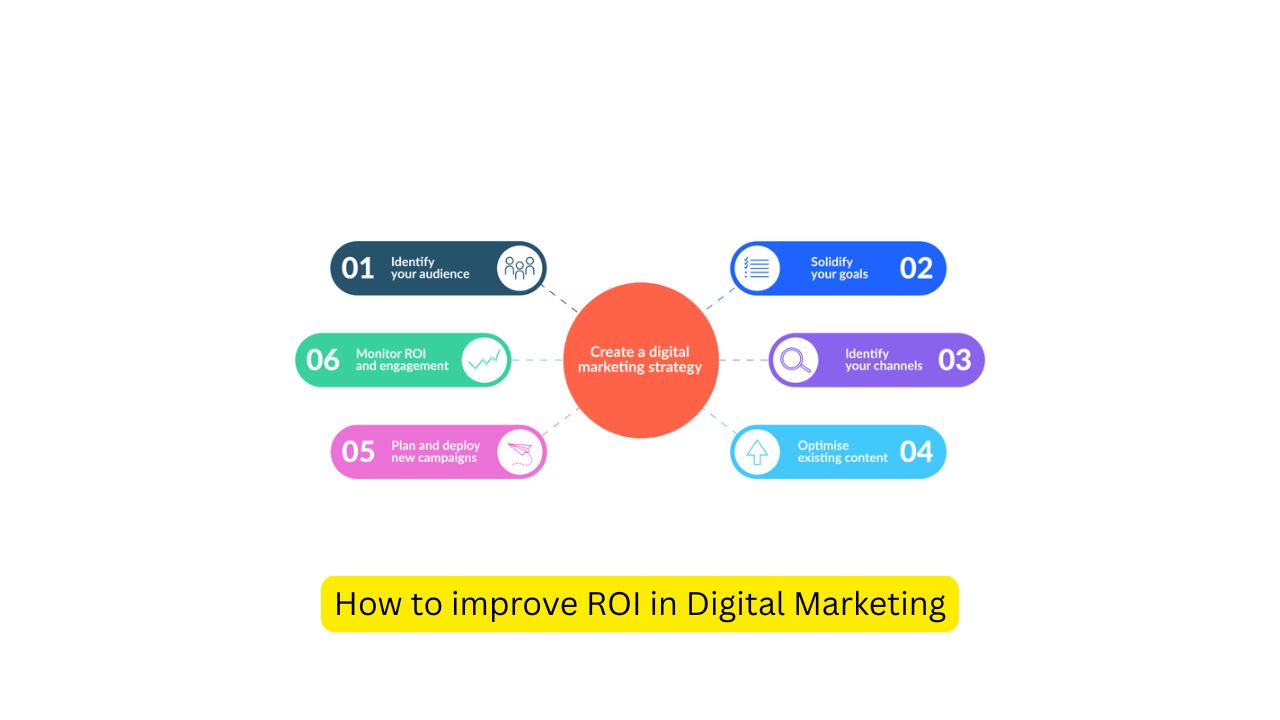
The Return On Investment (ROI), also known as ROI is the underlying principle of any effective digital strategy for marketing. Simply stated, ROI measures how much the revenue you generate from your marketing as compared to what you put into.
If a company invests $1,000 on advertising and generates five thousand dollars in revenues then the ROI is positive. But the digital marketing ROI is more than just figures. It reflects the efficiency of all campaigns methods, channels, and strategies.
Imagine digital marketing as planting seeds in the garden. Some seeds germinate quickly, whereas others require time to develop. Paid advertisements can bring instant traffic, whereas SEO can take months to bring in organic visitors. Both methods can yield a high ROI, however the timeframe and the investment amount differs dramatically. Companies that are aware of this will be able to allocate their resources efficiently and avoid overspending on marketing budgets.
Another reason ROI is so important is the accountability. Modern marketing is based on data, and businesses want every penny spent to yield tangible outcomes. Utilizing advanced analytical tools and techniques, marketing are able to keep track of clicks, impressions revenues, and conversions. This information helps teams determine which campaigns are successful and which ones require improvement.
In the current digitally competitive landscape just running ads or putting up content is not enough. Businesses need to have a thorough knowledge of how marketing activities can contribute to increase in revenue. By continuously monitoring ROI, companies can tweak strategies, decrease unnecessary costs and concentrate on marketing campaigns that provide real worth.
Why ROI Is the Most Important Marketing Metric
Every marketer needs visibility as well as engagement, traffic, and. But none of these indicators really matter if they don’t result in revenue. That’s the reason ROI is regarded as the most important indicator of performance in marketing. It directly links marketing activities to business performance which makes it much easier for businesses to justify budgets and create successful campaigns.
Marketing budgets across the globe are gradually shifting towards digital platforms. In reality, about 72% of marketing budgets are allotted to digital marketing efforts and highlighting the increasing importance of measuring results. This has forced companies to concentrate more on the metrics of ROI and cost per acquisition and the value of a customer’s lifetime.
When companies prioritize ROI, they are more strategic in their decision-making. Instead of focusing on any platform that is trending marketers evaluate the places where their customers spend time and also where conversions take place. This method leads to better investments and long-term growth.
ROI can also be a catalyst for the need for experimentation. Marketers can try different ads, landing pages or even messaging variations, and swiftly determine what is most effective. This method of testing turns marketing into a continual improvement process. As time passes, tiny changes can lead to major growth in profits and revenue.
Companies that do not consider ROI frequently struggle with inadequate spending. It may look attractive on the surface, with thousands of clicks or likes, but without actual conversions these metrics are of no value. By focussing on ROI, marketers make sure that their strategies are in line with the long-term goals of business.
The Current State of Digital Marketing ROI
Key Statistics About Digital Marketing Returns
Digital marketing is now among the top-performing avenues for companies across the globe. Data from industry sources show that businesses earn an average of $5 per $1 they spend for digital marketing.This is a staggering return that explains why the growth of digital advertising continues quickly every year.
Some channels deliver even stronger results. Marketing via email is among the most efficient ROI driver that generates around $42 in revenues per $1 of investment and an incredible 4200 percent return. This high-quality performance comes from its low-cost as well as its direct communication and ability to customize messages to various audience segments.
The search engine optimization (SEO) is yet another highly-performing channel. Businesses typically receive about $22 in revenues per dollar invested in SEO which makes it an extremely lucrative long-term strategies for marketing. In contrast to paid advertisements the organic search traffic keeps providing value even following the investment.
The overall market for digital marketing is growing rapidly too. The global digital advertising market is predicted to reach $765 billion in 2026 which is a reflection of the increasing use of online channels to drive business expansion. With competition increasing marketers have to concentrate more than ever on enhancing campaigns to keep a strong return on investment.
These numbers reveal a crucial fact: digital marketing is effective when it is executed in a strategic manner. But there aren’t all campaigns that yield identical returns. Companies that analyse the performance of their campaigns and then refine their strategies are consistently more successful than those who are based on a guesswork approach.
ROI Comparison Across Different Marketing Channels
Different channels of digital marketing generate different levels of return on investment based on the target audience, the industry, and the strategy employed. Some channels produce immediate results while others create long-lasting brand authority. Understanding the difference between these two helps companies to choose the best mix of marketing strategies.
| Marketing Channel | Average ROI |
|---|---|
| SEO / Organic Search | 748% |
| Email Marketing | 261%+ |
| Influencer Marketing | 206% |
| LinkedIn Organic | 229% |
| Facebook Ads | 87% |
| PPC / SEM | 36% |
These numbers illustrate a typical pattern in the field of digital marketing. Organic channels typically have higher ROI over time and paid channels deliver quicker results, but require ongoing investment.
For instance, PPC campaigns can generate immediate leads and traffic. The majority of businesses get about $2 per $1 invested in PPC advertising and this makes it a viable short-term investment. However when the budget for advertising is exhausted, the traffic will typically cease.
SEO as well as content marketing work differently. Although they take longer and effort initially and require more effort in the beginning, they can continue to generate traffic for months, or years. This is why organic search ranks consistently as one of the top ROI channels.
The most effective digital marketers mix different channels instead of only relying on one. By balancing campaigns for short-term results with long-term strategies, companies are able to sustain steady growth while maximising the overall ROI.
Key Factors That Influence Marketing ROI
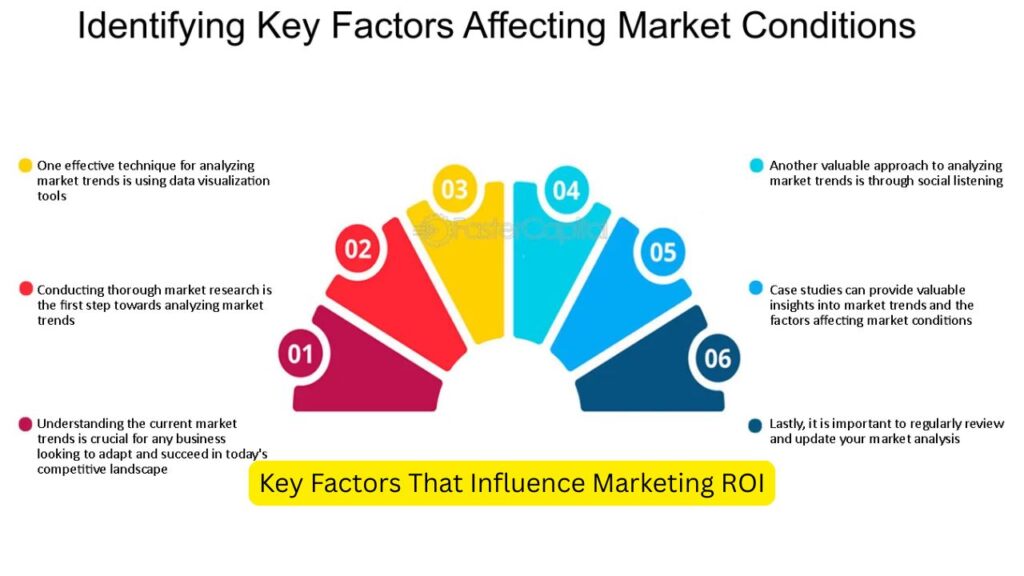
Target Audience Accuracy
One of the main reason why marketing campaigns fail is the ineffective targetting. Consider trying to market high-end watches to teens who have no buying power. Even the most innovative advertisement will fail in the event that the audience isn’t on board.
Targeted precisely ensures that advertising messages are able to reach those who are attracted to the item or product. Digital platforms today allow companies to categorize their audiences based on characteristics, behaviors, demographics and purchasing historical data. When properly utilized this information can dramatically increase the probability of conversion.
Advanced targeting strategies help reduce the amount of advertising that is wasted. Instead of advertising to millions of users who are not interested businesses can concentrate on a small number of highly-interested prospects. This method reduces the cost of acquisition and boosts profitability.
The rapid growth technology of predictive and artificial intelligence has enhanced the accuracy of targeting. AI tools are able to analyse massive data sets to find patterns in the behavior of customers. Marketers can then design campaigns that are tailored to specific customer segments, and provide customized experiences that increase the engagement of customers and increase conversions.
Content Quality and Relevance
Content plays an integral part in the digital marketing ROI. Quality content draws visitors in build trust and increases conversions. Content that is poorly written or not relevant is, on the other hand could turn off potential customers.
Consider content as a digital version of an agent of sales. When someone browses a website or reads an online entry the content should be able to answer the reader’s questions, address his issues, and lead users to find the solution. If it doesn’t do this the reader simply leave and seeks out a different source.
Effective content marketing is focused on solving problems, not only advertising products. Videos, blog posts as well as case studies and tutorials can help a brand establish itself as a reputable authority within its field. In time it builds trust and boosts the conversion rate.
The search engines are also rewarded for quality content. Websites that are consistently publishing valuable content tend to be ranked better in results from search engines, which means they are able to attract more organic visitors. This increases visibility and leads to increased sales and leads which in turn boosts marketing ROI.
Proven Strategies to Improve ROI in Digital Marketing
Optimize Conversion Rate (CRO)
It is beneficial to increase traffic however, increasing conversion rates is typically the most efficient way to increase ROI. CRO stands for Conversion Rate Optimization. (CRO) is focused on converting the existing visitors to websites to paying clients. Even minor improvements to conversion rates can greatly increase the revenue.
Imagine the website receives 10,000 people per month and an average conversion rate of 2. This would result in 200 clients. If CRO strategies can increase efficiency to a rate of 3 percent that same traffic brings in 300 customers, which is a 50% increase, without having to spend more money on advertising.
Common CRO strategies include improving the design of landing pages and reducing checkout procedures as well as using more effective calls-to-action. A/B testing is particularly efficient to determine what is most effective. Marketers are able to test various headlines and layouts as well as button colors to see which has the highest conversion rate.
The user experience plays an important role in the conversion rate. Inconvenient loading times, slow loading navigation, or confusing forms could deter customers from making purchases. By optimizing the user experience, businesses can drastically improve their campaign’s performance.
Reduce Customer Acquisition Cost (CAC)
Another way to increase marketing ROI is to lower the cost of acquisition for customers (CAC). CAC is the amount it is cost to get new customers through sales and marketing efforts. If the cost of acquiring a new customer is more than the amount of revenue they bring in, the business model is no longer sustainable.
The process of reducing CAC usually requires improving targeting, enhancing messages and focusing on highly effective channels. For instance, businesses might realize that organic search can bring customers for less than paid advertisements. If they invest more in SEO and reducing the overall cost of acquisition.
Retargeting campaigns can also reduce the cost of acquisition. The campaigns target people who have been to a website or had a conversation with an organization. Because they are familiar with the company and brand, they are more likely to be converted.
Marketing automation tools can also lower acquisition costs by automating repetitive tasks, such as emails as well as lead nurture. Automation tools enable marketers to ensure that prospects are kept in contact without putting more money into labor.
Increase Customer Lifetime Value (CLV)
The goal of improving ROI isn’t just focused on reducing costs. It’s also about increasing the revenue per client. The Customer Lifetime Value (CLV) determines how much revenue a consumer earns over the course of their relationship with a company.
Companies that concentrate at acquiring customers frequently neglect the importance of existing customers. Maintaining loyal customers and encouraging them to make frequent purchases can greatly boost profits. People who are loyal to a brand typically spend more money, recommend brands to friends and need less marketing investments.
Strategies to increase CLV can be achieved through loyalty programs, customized recommendations, and superior customer service. Cross-selling and upselling can also play significant roles. For instance the online retailer may suggest complementary products at checkout, which can increase the value of an order by a certain amount.
Companies that focus on customer relations tend to have a higher long-term ROI. Instead of continually chasing for new prospects, they develop a solid customer base that produces steady revenue over the course of.
Leveraging SEO to Boost Marketing ROI
Search Engine Optimization remains among the most reliable ways of increasing the ROI of digital marketing. In contrast to paid ads which cease to generate traffic after budgets are exhausted, SEO continues delivering visitors for a long time beyond the first investment.
Organic search traffic is also known to be highly intent. When users look for answers on the internet, they usually have a specific need or a problem to resolve. Companies that are ranked well on relevant keywords are able to take this intention and turn them to customers.
SEO increases brand trust. Websites that are on the first page of results are generally viewed as more reliable and trustworthy. This boosts click-through rates as well as conversion rate.
A successful SEO strategy consists of multiple elements that include the research of keywords, on-page optimization technical SEO and link creation. Although the results could take a few months to be visible however, the long-term advantages will far outweigh the initial investment.
Using Data Analytics for Smarter Decisions
Data is the fuel for today’s digital advertising. In the absence of analytics, marketing professionals are operating in darkness. By keeping track of the performance of key metrics of performance (KPIs) companies can pinpoint which campaigns generate the most profit.
Relevant metrics include conversion rates as well as cost per acquisition the value of a customer’s lifetime, and the return on investment. Monitoring these metrics helps marketers quickly detect inefficiencies and alter strategies to address them.
Businesses that are actively tracking the ROI of their marketing often get more effective outcomes. Research shows that companies that use attribution tools have approximately 26% better campaign ROI as compared to businesses who do not measure their effectiveness.
Analytics tools assist marketers to understand the whole customer journey. Instead of focusing only on a single event, they are able to see how various channels impact conversions. This comprehensive view allows for better budget allocation as well as more effective campaigns.
The Role of Personalization in Increasing ROI
Modern consumers expect personalized experiences. The generic marketing messages aren’t able to grab the attention of an audience that is constantly bombarded with information. Personalization enables businesses to send relevant content that is tailored to the individual’s preferences and behavior.
A personalized marketing strategy can greatly increase engagement and conversion. Studies suggest that successful personalized strategies can boost revenues in the range of as much as 40 percent and reveals their impact on the performance of marketing.
Examples of personalization are the recommendation of products, customized email campaigns, as well as dynamic content on websites. By studying the data of users, companies can design experiences that are more relevant and useful to their customers.
Personalization can also improve customer relations. If brands show that they know the needs of their customers trust grows. This leads to greater satisfaction, loyalty, and long-term profit.
Automation and AI in Digital Marketing
Artificial Intelligence is revolutionizing marketing through digital channels in a powerful way. AI-powered tools can analyse massive data sets, detect patterns, and improve campaigns in real-time. This lets marketers make better choices faster.
AI will automate the tasks like the segmentation of audiences, bid management and content recommendations. These improvements help cut down on the amount of advertising wasted and increase effectiveness of campaigns.
Many companies are already seeing tangible benefits through AI adoption. Studies show that more than 80percent of marketers use AI tools, and the majority of them report tangible ROI improvement. (TechRadar)
AI can also improve predictive marketing. Through the analysis of the past, algorithms are able to predict the behavior of customers and suggest the most effective marketing strategies. This capability to predict behavior can help companies allocate budgets more efficiently and increase profits.
Budget Optimization Strategies
One of the most effective ways to boost the effectiveness of marketing is to shift budgets towards channels that yield the highest outcomes. There are not all platforms that work equally for every company, and continual testing and evaluation is crucial.
For example an B2B business could generate most of its leads via LinkedIn or email marketing campaigns however, an online retailer might see better results through influencers and social media collaborations. Recognizing these patterns will allow marketers to invest in areas where they are most needed.
Regular reviews of performance are crucial. Companies that update their marketing budgets every quarter often have more success than those who review them just once a year. This flexibility allows businesses to rapidly adapt to changes in market conditions and changes in consumer behaviour.
Through combining data analysis, experiments, and strategic budgeting marketing professionals can continue to improve their the ROI of their campaigns over time.
Read also:-
- Top Free Software for Windows Users (2026 Guide) – Best Free Windows Apps
- What Is SEO Consulting? A Beginner-Friendly Guide for Businesses
Conclusion:-
The process of maximizing ROI in digital marketing takes more than just increasing the number of ads or posting content. It requires a shrewd approach that is focused on efficiency, analytics-driven decisions, as well as relations with customers. Companies that are aware of their target audience and optimize conversions invest in highly-performing channels regularly beat the competition.
Digital landscapes are continuously changing, with emerging technologies like AI as well as advanced analytics revolutionizing the way campaigns are run. Marketers who use these tools can gain deeper understanding, customize experiences and maximize budgets with astonishing accuracy.
In the end, success in digital marketing relies on finding the right balance. Businesses need to combine tactics that are short-term such as paid advertising with long-term strategies like the use of SEO or content marketing. If they are executed correctly they create an effective ecosystem that can generate steady growth and a high ROI.
FAQs:-
1. What is the most effective ROI on digital marketing?
A high ROI for digital marketing generally ranges between 3:1-5:1 business earns an average of $3 to $5 per $1 they spend. The ideal ROI is determined by the your business model, industry and the goals of the campaign.
2. Which of the digital marketing channels is the most profitable?
Marketing via email often yields the most ROI, and studies have shown that the return can be as high as $42 per dollar spent.
3. How can small-scale businesses increase their efficiency in marketing?
Small-scale businesses can boost their ROI by maximizing conversion rates, focusing on certain groups by focusing on SEO and utilizing retargeting campaigns to convert visitors from their existing websites.
4. What makes SEO crucial for long-term ROI?
SEO produces organic traffic, which continues to bring people to websites in the course of time. In contrast to paid advertisements organic rankings can generate regular leads with no continuing expenses for advertising.
5. How can AI assist in increasing the return on investment for marketing?
AI enhances ROI by automating the process of optimizing campaigns and analyzing data patterns making marketing more relevant, personalizing messages and forecasting customer behavior to improve the rate of conversion.
 Follow Us On Google News
 Follow Us On WhatsApp

Leave a Comment