

When users type the query into a search engine such as Google and Yahoo, they are expecting immediate answers. In milliseconds, thousands or even millions of websites are displayed in the results. Have you ever thought about what Google determines which pages are available on the internet?
This is a procedure known as crawling. Crawling is how search engines locate content on the internet. Without it the search engines would be not able to locate or comprehend websites.
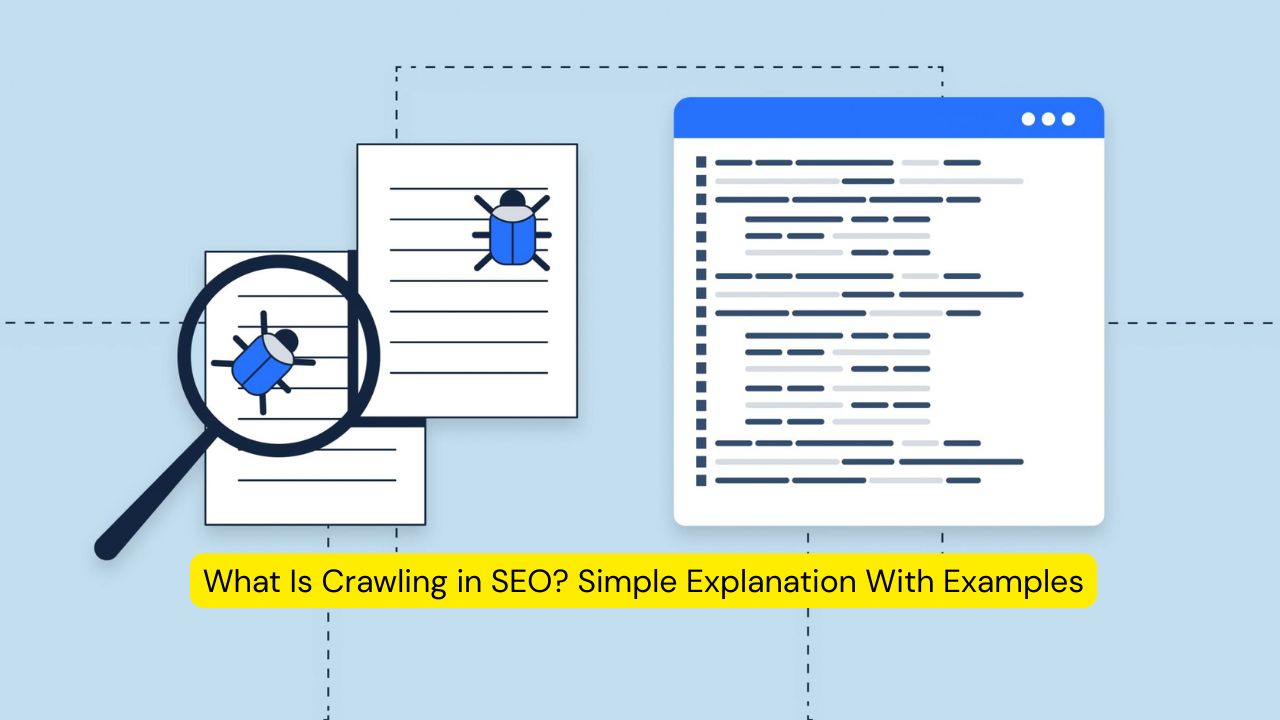
Search engines are powered by automated programs that continuously traverse the web gathering information about websites. Imagine them as digital explorers who move from page to page using hyperlinks, analyzing content and returning it to search engines to process.
The internet is huge and growing continuously with billions of web pages being made and added every single day. Crawling is a way for search engines to keep track of the ever-growing digital world.
The most interesting thing lies in the fact that Google and other search engines do not depend on one machine to perform this task. They utilize massive computer networks that scan and download web pages all over the world. According to Google’s official documentation the system scans billions of web pages to find new and up-to-date information. (developers.google.com) This constant scanning ensures that when someone searches for something like “best smartphones in 2026” or “how to start a blog,” the search engine already has information about relevant webpages.
Understanding how crawling works is vital for anyone involved in SEO (Search Engine Optimization) because it determines if your website will be found in the results of searches. In the event that a web search engine can’t crawl your website and index it, it won’t be able to crawl it. If it’s not indexed the site won’t be listed.
The Three Main Stages of Search Engines
Search engines function through three main stages that are used in order to present the results of a search to its users. Each stage has its own function in organising the huge quantity of information accessible online.
- Crawling – Identifying pages across the web
- indexing – storing and understanding the pages
- Search Ranking (Serving) – Showing the most relevant websites in search results
The three steps form the basis of search engine performance. Crawling is the initial step since search engines can’t assess or rank a website until they have first discovered the page.
Crawling vs Indexing vs Ranking
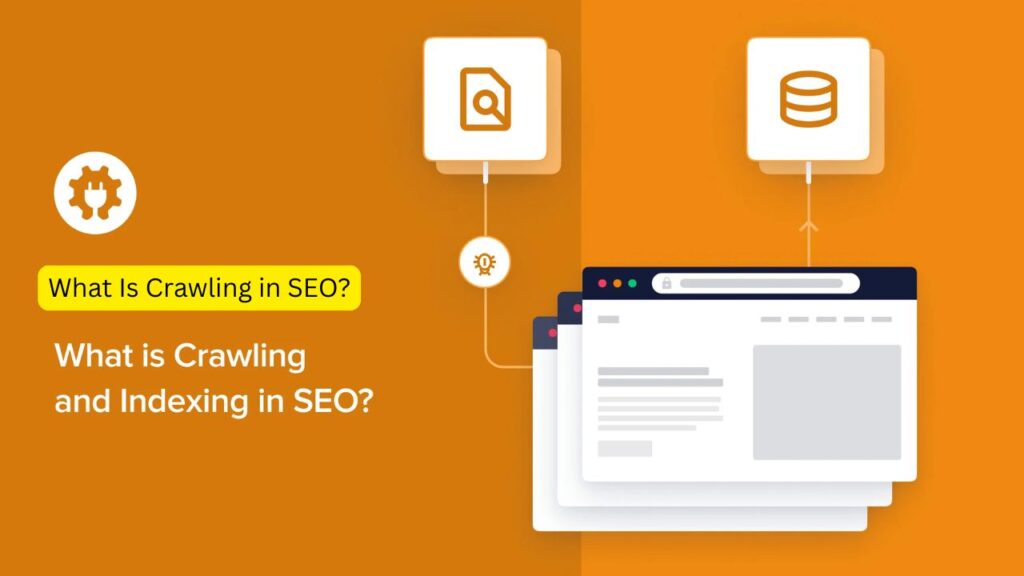
A lot of people think that crawling is indexing or ranking, however they are two distinct elements of the workflow of a search engine. Crawling is just a simple discovery process. Search engines find websites and download their contents to analyze. The indexing process follows, and the search engine stores and organizes information about these pages in a vast database known as the index of search. The ranking also determines which pages are on the first page of results when a user searches for keywords.
Imagine the library as an analogy. Crawling resembles taking books from various publishers and then bringing them into the library. Indexing is organizing the book collections into shelves and categories. Ranking refers to recommending the most relevant books whenever people ask the librarian an inquiry. Each step is dependent on the preceding one, meaning that crawling has to be done correctly before any SEO benefit will be realized.
What Is Crawling in SEO?
Definition of Crawling in Simple Terms
The term “search engine optimization” or the term “crawling” means the method by which robots from search engines browse websites to find and analyze the information. The crawlers examine text, images videos, links and other elements to determine the contents of a website. The most popular spider is Googlebot and is utilized by Google to browse the web. (Google for Developers)
A crawler begins by looking up the list of websites that are known to be visited. Then it clicks on hyperlinks on these pages to find additional websites. Every new link functions as a gateway that takes the crawler to a new web page. As time passes the process produces an enormous map of the internet. Crawlers gather information from each site they visit, and then send this information back for the indexing engine to be indexed.
It may sound easy however it’s extremely complex. Crawlers need to choose which websites to visit, when they should return and the number of websites to load without overburdening the server. They must also adhere to the rules of website owners by using files like robots.txt, which could block certain pages not being crawled.
Why Crawling Matters for Websites
Crawling is vital as it determines whether the website will be found through search engine results. If your website isn’t crawled, it will not show up in the results of a search. It’s like opening a shop in a dark alleyway with no signposts pointing towards it. If people can’t locate your shop, they won’t be able to purchase any item.
For content creators and businesses crawling is the path to visibility. Each time you release an article, blog post, product page (or landing page), search engines have to crawl the page before it appears within search results. Crawling helps ensure that search engines remain up-to-date with the most current information about your site.
Another reason why crawling is important is the quality of the content. Search engines visit pages regularly to determine if there has been any changes to the information. If you make changes to an article with new information or add new products to your store crawling allows search engines to recognize these changes and adjust their rankings accordingly.
How Search Engine Crawling Works
Role of Web Crawlers and Bots
Web crawlers, also known as bots or spiders–are computer programs that are designed to search the internet in a systematic way. Their main function is to collect data on websites and transmit that information directly to the search engine. These bots scan links, look at the structure of pages and download vital data like headings, titles, and meta descriptions.
When a user visits an internet page, it analyzes it’s HTML code to determine how the page’s structure is constructed. page. It detects links to other sites that are added to the queue for subsequent crawling. The process is never ending and allows search engines to access large areas of the internet.
A fascinating aspect is that crawlers render websites in a similar way to modern browsers. This means that they are able to handle JavaScript as well as dynamic information, assisting them to comprehend websites that use interactive elements. The crawler doesn’t read text, it interprets the content in a way that a human would.
How Search Engines Discover New Pages
Search engines search for new sites using various ways. The most popular method is by examining links on other pages. When a crawler finds an link to a brand new page and it is added to its queue, it will add the page to its queue of crawlers. This is the reason internally linking plays an important role in SEO.
Another way is via XML websitemaps that are submitted by owners of websites. Sitemaps function as an itinerary that lists the most important pages of websites. Search engines make use of this map to find pages that need to be crawled and index.
Sometimes, pages are found through external links on other websites. If a different website connects to your site Search engines can browse through that link to discover your website’s content. This is why backlinks are essential in SEO. They aid search engines in locating and assess new content on the internet.
Real Examples of Crawling in SEO
Example 1 – Crawling a Blog Website
Imagine that you create an online blog about marketing via digital. You write a new post entitled “10 SEO Tips for Beginners.” In the beginning the page is only on your site. The search engines aren’t aware about it.
When Googlebot is on your site it scans the homepage and discovers an link to your latest blog article. The crawler clicks on that link and downloads the page’s content. It also collects data such as the title of the page as well as headings, the page’s principal text. Once this information is processed and the page is index and then appear in the search results if people search for SEO-related suggestions.
This straightforward process demonstrates how crawling can connect your website’s content to search engines. Without it, the most valuable content would be unreadable on the internet.
Example 2 – Crawling an E-commerce Website
Imagine an online store selling thousands of items. Each page of the product has descriptions, photos and pricing details. Search engines must go through all of them independently to comprehend what products are available.
If the site has strong internal linking – for example, category pages that link to product pages, crawlers can effortlessly browse the entire site. But, if certain products are not linked to crawlers could not locate them. If that happens, those pages will not appear in the search results.
This case illustrates why site structure is important in SEO. Linking and navigation that is properly done will help crawlers navigate your site in a more efficient manner.
Key Elements That Help Search Engines Crawl Your Website
Internal Links
Internal links are among the most crucial elements when it comes to crawling. They link different pages on your website, and direct crawlers between pages. If your website has a solid internal linking structure crawlers are able to easily find new pages.
Consider the internal connections as roads that connect various cities. In the event that roads are well-maintained and well-connected, visitors can easily travel between different locations. In the same way, crawlers can browse your website faster when pages are linked to one another in a rational way.
XML Sitemaps
The Sitemap in XML is basically a listing of the most important pages that are on your site. It serves as a reference that informs search engines of which pages are present and when they last updated. The submission of a sitemap using tools such as Google Search Console helps search engines to crawl your site more efficiently.
Sitemaps are a great resource for larger websites or websites that haven’t yet many backlinks. With a sitemap, you’ll ensure that search engines have access to your website even if they’ve never found them via hyperlinks.
What Is Crawl Budget in SEO
Factors That Affect Crawl Budget
Crawl budget refers the amount of pages the search engine crawls on your site within a specific timeframe. Websites with a large number of pages typically must manage their crawl budget carefully in order to make sure that the most important pages are found and indexed.
Two major factors affect crawl budgets: crawl rate and demand for crawl. Crawl rate is the speed at which the search engine is able to crawl a website while not overburdening the server. Crawl demand is a measure of how important or popular the site’s content is in search results.
Websites that have a strong reputation and speedy loading speeds and regularly updated content are likely to get more traffic from crawlers. However poor servers, redundant content broken links, and duplicate content can decrease the efficiency of crawls. Optimizing the crawl budget is particularly essential for large websites like e-commerce websites that have hundreds of pages for products.
Common Crawling Issues and How to Fix Them
Blocked Pages via Robots.txt
The most common crawling problem is when important websites are blocked accidentally through an robots.txt file. This file informs crawlers of search engines what pages they should or shouldn’t access. If it is not properly configured it may block crawlers from accessing important pages on your site.
For instance certain developers have their sites blocked while they are developing it with an option called Disallow:. If this setting isn’t removed prior to launching the website then search engines won’t be able to browse the entire website.
Slow Website Speed
The speed of websites plays a significant part in the effectiveness of crawling. If a server is slow to respond crawlers could limit the pages they browse. Speedier websites enable crawlers to complete more pages in the same timeframe.
Enhancing the speed of response to servers by optimizing images and caching could significantly enhance the performance of crawlers. If a website loads fast crawlers are able to explore more content and browse pages more quickly.
Best Practices to Improve Website Crawling
Enhancing crawling doesn’t require complex techniques. The majority often it’s just a matter of following basic SEO guidelines which make your site more accessible to users. The first step is to ensure that every important page is linked to somewhere on your site. Pages without links are very difficult to crawlers to find.
Third, ensure a tidy and logical website structure. Categories, subcategories and navigation menus must guide crawlers and users through the site. If content is clearly organized crawlers are able to comprehend the relationship between pages.
Thirdly, you should regularly update your content and create new pages. Search engines favor websites that regularly update important information. New content shows that your site is in operation and worthy of revisiting.
Also, keep track of crawling activity with tools such as Google Search Console. These tools will show you how frequently search engines visit your website and also highlight any issues which could hinder your website from being indexed.
Conclusion
Crawling is at the start of any search engine interaction with a web site. Before a website can be displayed within search result pages, the page has to be first discovered by search engine robots. Crawlers search the internet through links, searching pages, and submitting data back to search engines to index. Without crawling the search engines would be unable to have any method of locating or understanding the millions of pages online.
For SEO and website owners professionals, knowing how crawling works is vital. A well-structured website that has easy navigation and internal links and a sitemap allow crawlers to easily find content. On the other hand technical issues such as blocking pages, or high loading times may stop crawlers from accessing crucial content.
If you are thinking about SEO success, keep in mind that everything starts with the discovery. If search engines can’t crawl your website, your content remains hidden. When you optimize your site to crawl, you create the foundation to indexing, ranking and eventually getting natural traffic through search engines.
FAQs
1. What is crawling? SEO in simple terms?
The process of crawling SEO is the process by which search engine robots browse websites to analyze and discover their content. They follow links across the internet to locate new sites and relay information about these pages to search engines.
2. What’s the distinction between indexing and crawling?
Crawling involves finding webpages and indexing is the process of organizing and storing those pages within the database of a search engine. Crawling is the first step but only then the page can be index and ranked.
3. What is Googlebot?
Googlebot is the Google’s Web crawler, which examines websites on the internet. It gathers data about websites, and then sends the information to Google to ensure that it is index and ranked within search result pages.
4. How is the time it takes for Google to go through a webpage?
Crawling times vary based on the authority of the website as well as internal links and demand for crawls. Some websites may be crawled in hours, while others could take days or even weeks.
5. How do I make my website more user-friendly?
It is possible to improve crawling speed by establishing a clear site structure, including internal links, and submitting your sitemap in an XML sitemap, increasing the speed of your site, and not blocking important pages from robots.txt.
 Follow Us On Google News
 Follow Us On WhatsApp

Leave a Comment